
How Breast Cancer Changed My Perspective and Appreciation for Life

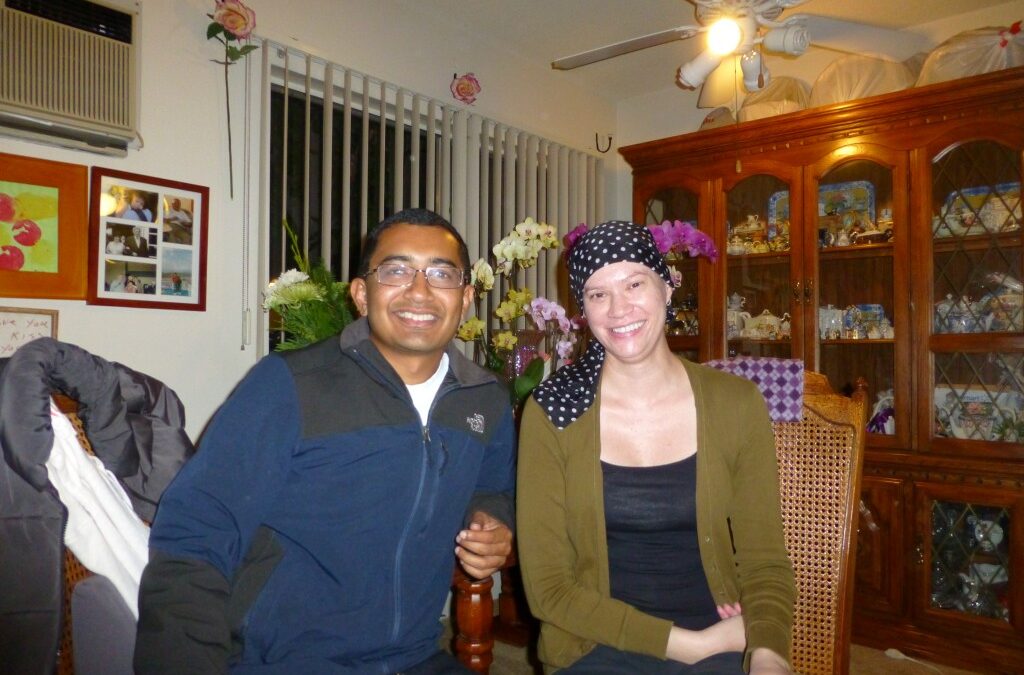
My friend and hero, Marina.
My doctor tried to soften the blow of the bad news by telling me that I caught it early.
Then I heard the words that would terrify and frighten anyone.
The diagnosis: breast cancer.
Imagine receiving this news just 3 weeks after your dad had passed away.
I decided not to tell my mom about my diagnosis right away because she was in a vulnerable place, already having lost her life partner. I also wanted to have all the answers to any questions my Mom would have before I told her about the diagnosis.
After some tests were done, I sighed a little with relief when I discovered that the breast cancer was at Stage 1 and was the size of a small coin.
Although the doctor tried to assuage my fears by confidently telling me my life wasn’t in danger, the next year was not an easy one.
My doctor told me I needed to have a mastectomy (breast removal surgery) rather than a lumpectomy (breast-conserving surgery). I’m glad that decision was made for me and I didn’t have to make it myself.
My cancer journey began with surgery, followed up by chemotherapy starting approximately 2 months after my surgery.
The doctor explained that I needed additional chemotherapy because I was very young. Women are more likely to be diagnosed with breast cancer later in life (with the highest percentage of women being diagnosed in their 60s and 70s).
Statistically speaking, I still had a long life ahead of me, which meant I had a longer period of time in which the cancer could return. So chemo was supposed to reduce that chance of reoccurrence as much as possible.
I was the youngest patient in the room receiving chemo treatment, so I imagined I could handle it.
Unfortunately, I was wrong.
Chemo kicked. My. Butt.
Within 24 hours of my first round of a chemo session, my stomach and back were throbbing with pain.
I had no appetite and felt exhausted.
Within 48 hours, I had blurry vision and was getting hot flashes. Within 72 hours, all of my joints ached and I felt like a 90-year-old woman, and I had difficulty processing thoughts. It felt like everything was happening in slow motion.
Losing my hair.
But with all of those unpleasant side effects, what I feared most was the day my hair would start falling out.
My doctor informed me it would take about 2 weeks for my hair to start falling out, so I waited anxiously.
I remember the first huge clump of hair falling out, enough to fill my entire fist. If I had been in denial up to that point, it stopped that day. I really was sick.
I decided to shave my head rather than waiting for the rest of my hair to fall out. It was the only thing I could do to gain back some of the control I had lost.
I recalled so many times in the past where I complained about having a bad hair day. It seemed so trivial now as I was looking at myself in the mirror with barely any hair.
Healing my body. Changing my outlook.
My chemotherapy sessions, treatment and healing continued over the next year.
Eventually my hair grew back, the stomach pains subsided, and I got my energy back. Physically, I was starting to look like the old me.
But the inside is where I experienced the most unexpected changes and growth.
I was different. Some people say that getting cancer didn’t change them. Well, that wasn’t the case for me.
Cancer changed me. And not in a bad way either.
Cancer opened my eyes.
It taught me the importance of gratitude.
When I started feeling physically better, I started appreciating the simple things in life.
Meals, phone calls to friends, going for a walk … all of these things have more meaning than they did before.
It’s amazing how being grateful started a chain reaction with regards to other aspects of my life.
I smile more, gossip less, and I’ve become more active and adventurous in life.
When you get a glimpse of how fragile and painful life can be, you begin to appreciate and embrace it a lot more.
Besides being more grateful, I have also learned to be more “selfish”.
Okay, it’s not really being selfish as much as I am now more aware of what I want, and I don’t ignore those feelings.
It’s surprising what I used to do out of obligation or guilt to the point where it caused me stress.
For example, I maintained friendships that weren’t healthy. That’s no longer the case. If I don’t want to do something, I don’t do it. I say “no” more often.
Unfortunately, I do not have any tips on how to reach this peace that I have found. There’s no 10-step process that I can recite.
All I know is that I don’t think I could have gained this understanding without being fully stripped down, and that’s the irony.
Am I glad that I got cancer? No.
Did I get something beautiful out of this that I wouldn’t have discovered any other way? I think so.
I went through a lot of obstacles that year, but through it all, I have learned to love my life, appreciate the small things and value myself more than ever.
Oh, and I do have a little advice – be wary of who you sit next to on the first day of class. For example, you could start your first day of law school sitting next to someone named “Vishnu” and be pestered into writing a blog post for him ten years later.
Marina is not a blogger and never could have imagined herself sharing such a personal essay. (Thank you for your inspiration and courage, Marina 🙂 )
Have you survived a horrific illness or health problem? What were some of the lessons your injury, illness or disease taught you? Please share in the comments section below.


