by Vishnu | Mar 27, 2016 | Simple Living
The post-divorce life is nothing to write home about.
You’re grieving and in pain – alone and afraid. Uncertain of what the future holds.
But as I’ve found out, divorce can gift you a new life.
When you crash, burn and hit rock bottom, there’s no way to go but up.
It’s a mantra that I repeated during my divorce and it’s held up to be true.
Your life can’t get any worse; it can only get better.
It’s this time in my life that I further refined and doubled-down on simple living.
While I had been attracted by simplicity throughout my life, I couldn’t get as intentional about it as when I was divorced.
Over the past few years, I’ve simplified, reduced and minimized my life in many ways.
Out the door went clutter and overwhelm, so I could welcome in Zen and happiness. I want to share with you some of the tools that I used to simplify my life.
Here are the 5 questions that can help you on your journey to simple living.
1. What can you live without?
Look around your life. What’s in it that you hardly notice? What could you get rid of and never miss?
Look at items you never use and large pieces of furniture that have stayed in one spot just because you put it there. Look for equipment you no longer use, workout machines that are laying around the house and appliances you haven’t used in years.
If you haven’t used something in the past 6 months, strongly consider getting rid of it.
I’m talking clothes, gadgets, computer equipment, appliances, furniture, knick-knacks and anything you else that’s taking up room in your living space.
If your life can go on without it, give it away!
2. What no longer brings you joy?
This is a question inspired by Marie Kondo and her organizing principles in her book, The Life-Changing Magic of Tidying Up. She writes that anything which doesn’t spark joy in your life should be touched, thanked and ceremoniously sent away for a better life.
I would say expand this from clothes to everything in your life.
The divorce has released a person from your life who no longer sparks joy in you. Why not keep going?
Pick up clothing and ask if it brings you joy? No? Out it goes.
Pick up paintings and decorations. If it doesn’t make you happy, pack it up and donate it.
Shoes? Furniture? Kitchen utensils and appliances?
It may have brought you joy at one time, but if it doesn’t bring you joy today, send it on its way.
3. What is no longer useful?
I’ve found this tip helpful for getting rid of books, clothes and even furniture.
Can I use the item at hand?
Is there a practical value to it? Do you have two items that can do the same job?
Do you have a new laptop and an old laptop stored away? Do you have three lamps? Two filing cabinets? Eight sleeping bags? Seven irons? What about your 298 pairs of shoes?
If you’re not using something and it’s no longer of use to you, consider getting rid of it.
Give it away, donate it, sell or pass it along to someone who will find some use from it.
Question: “Is this still useful in my life”?
4. What reminds you of the past and needs to be released?
Look at what’s laying around? What’s left in your living and sleeping area that reminds you of your ex?
Photo frames that are no longer in use?
Trinkets of shared memories? Decorative items? Skis from your trips together?
If it’s your ex’s, definitely give it away. (Somewhat kidding here. Check with your lawyer first.)
If it’s a memory of your ex and continues to take you to happier days that no longer exist, consider giving it away.
Our past relationships and our life together include the things we shared and used. If the person has left your life, there is no point in holding onto those things that continue to remind you of your ex.
Oh, and as far as the kids, keep them, even if they do remind you of your ex.
5. What is taking up your energy and your time?
Look at the projects you’re working on, the meetings you’re attending and how you’re spending your time.
Just writing down what your typical day looks like will give you an idea of how you’re spending your precious hours. Once you analyze your schedule, see if it makes sense to you.
Are you enjoying it? Are there activities or people you could live without?
Once you ask yourself these questions, start making changes. How can you let go, move or say farewell to time and energy drainers?
Like relationships that no longer fit, there are activities and interests that no longer fit.
Find the courage to stop doing whatever it is you’re not enjoying. Break the default pattern, stop the people-pleasing game and make a new pact with your life. Only do those things that you’re absolutely passionate about.
Enjoyed reading this post? Check out my books page for more of my writing.
by Vishnu | Mar 20, 2016 | Simple Living
I’m no hermit, monk or saint.
I’m simply someone who went through a divorce and had a life-changing experience.
I realized after my ten year relationship ended I not only needed to introspect and reflect within, but also to look closely at everything around me.
My divorce became my springboard towards a simpler but more meaningful life. I no longer did things or kept things in my life simply by default or because everyone else had them.
Simplicity means living more intentionally. It’s choosing what you want. It’s keeping the things in your life that bring you joy, as Marie Kondo would put it. Or those things that add value to your life, as the Minimalists would preach. It’s then letting go and getting rid of everything else.
If you’re going through a divorce, you’re likely letting go, minimizing, down-sizing and releasing whatever is weighing you down. Not only are you letting go of a partner, you’re letting go of a lifestyle.
While you’re simplifying your life, I encourage you to give up these 21 other things that I let go after my divorce. I understand not all of it will resonate with you, but feel free to pick and choose what to keep and what to let go.
21 things to let go of after your divorce:
1. Busy-ness.
Before my divorce, work came first and I worked long hours. Post-divorce, I asked myself why. A bigger paycheck doesn’t justify sacrificing your life and your relationships. Just because everyone is running around crunched for time and filled with obligations doesn’t mean you have to adopt that kind of life too.
Figure out what’s important and drop off every other obligation from your calendar. Politely decline invitations. Get out of previously made commitments and engagements.
2. Housing.
For much of our marriage, we owned a home that ate up our finances and peace of mind. It wasn’t the right time for us to own a home. We were still in the early stages of our career. If you’re going to be single again, it’s likely you won’t need a home either. When you calculate the mortgage, taxes and repairs, you’re probably spending a significant portion of your income on housing.
Do the math and see if a house makes sense to rent. The additional money you save, you can invest. Money in the bank is freedom for your life.
3. Car payments.
Do you really need a new car every 5 years? I didn’t. The car I left my marriage with is the car I have today. I can’t tell you how much I enjoy not making a car payment every month. I’m going to keep up the maintenance so I can keep this car as long as possible. If I could live a life that didn’t require a car, even better.
Can you get by with public transport? Can you get a smaller car? Or make an attempt to pay off your car payments sooner?
4. Credit card debt.
While I didn’t rack up large credit card debt, credit card debt was always weighing down my finances when married. I no longer purchase anything that I can’t afford. If I need to put it on a credit card, I’m going to save up and purchase it when I have the funds. The interest is exorbitant and continues to accrue.
Work on paying off one credit card at a time until you pay it all off.
5. Furniture.
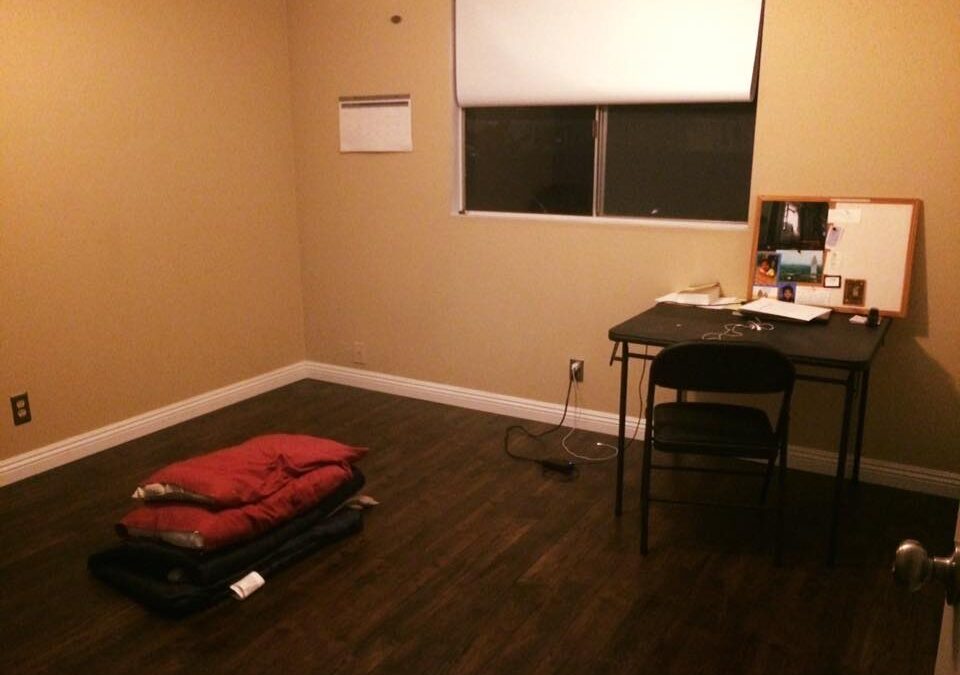
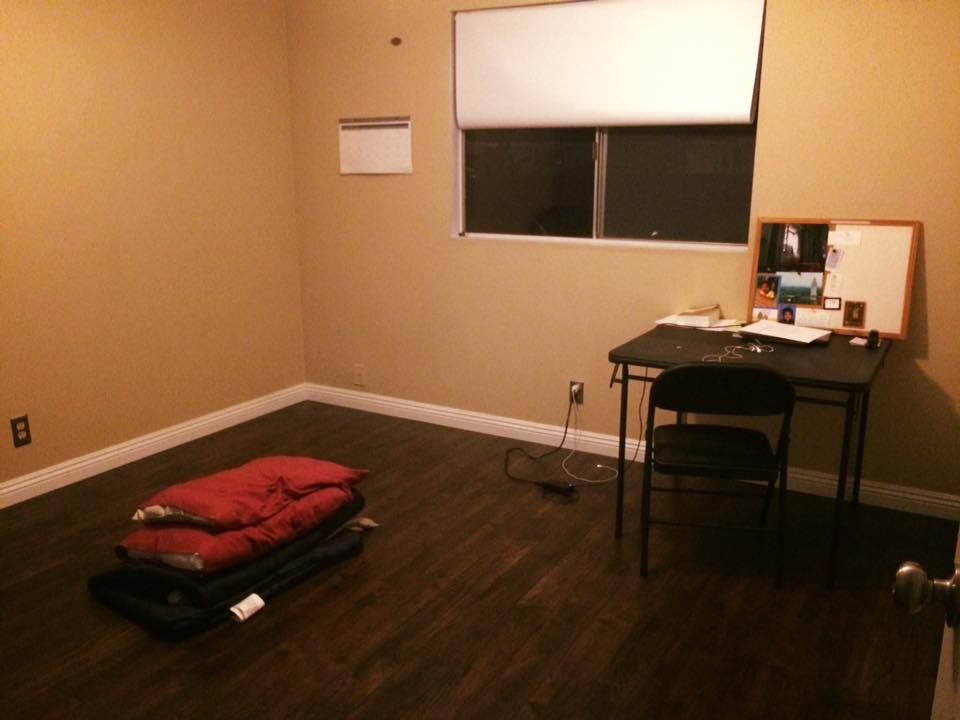
Every move while married required a U-Haul truck. Why? Our furniture, our books, our clothing, our desks and more. Post marriage, I’ve made sure that everything I own can fit into my car, including the only two pieces of furniture I own: a fold-up chair and fold-up table. Now, when I move, I just pack up the car in one car load. Whatever I can’t pack into the car, I donate.
Can you use your car as a way to measure how many things you have in your life? Can you buy furniture used and sell them when you’re moving? Can you reduce the amount of furniture you have in the first place?
6. A bed.
A bed is nice, comfortable and great to sleep on. So is a sleeping bag. I’ve been bed-less and happy. While a bed won’t fit into the car, my reliable sleeping bag and pillows always will. Plus, I can pack them up when I stay over with friends or go camping. Did you know that the floor is better for your back?
7. A television.
So much of our marriage was wasted on the television. We could have spent more time together instead of wasting our time on the noise box. A television robs you from meaningful conversation and quality time.
Try living without your television for a week – you’ll live, I promise. The shows will go on without you. You’ll also be blessed with hundreds of hours to contribute to society or work on your dreams.
8. Photo albums.
After our divorce, I was so distraught that I threw out our photos, including my personal wedding album. I found that tossing your photos will allow you to move on after your divorce. If you need some for any reason, scan them and toss the paper photos away. Photos consume space and keep you stuck to your past memories.
9. Books.
I stopped buying them and stopped storing them. I stopped moving them around every time I moved apartments. Books are heavy and usually only get read once. Choose digital books over paper ones. Use the library, which can order almost book for you. You can borrow it and return it. Read books for free while reducing the physical clutter in your home.
10. Clothes.
I haven’t given up clothing and donned a loin cloth, but I have gotten rid of clothing that I no longer wear. If I haven’t worn it in the past six months, I’ve gathered it up and donated it. In my closet, I have one pair of pants that I wear daily and about a dozen shirts, from t-shirts to long-sleeve shirts.
You are not wearing most of the clothes in your wardrobe. Have you worn it in the past 6 months? Are you holding onto it because of sentimental value? Are you keeping it for when you lose a few pounds and can fit back into your clothing? Whatever the reason is, know that you can live without it. Donate your clothes and give your closets some breathing room. Watch how much you value the clothes that you do have in your closets after you down-size your wardrobe. Check out this blog for ideas on minimizing your wardrobe.
11. Monthly subscriptions.
You can cancel your monthly subscriptions that you don’t love. Magazines, music, and online programs that have limited value in your life have to stop. These companies thrive on getting you to sign up for monthly subscriptions. Cancel your subscriptions and see if you miss any of them. If you can’t live without something, try the library. You will likely find the same movies and music there at no cost.
12. Stuff.
Have you noticed that you have items lying around that you might use only once a year or once every 5 years? Camping equipment, skiing equipment, backpacking tools, whitewater rafting gear and more.
If you haven’t used something in the past 6 months, consider giving it away. If you need it in the future, borrow it from someone. Stop accumulating other trinkets, household items and decorative items that you don’t need. Don’t just de-clutter your life, de-own.
13. Frivolous spending.
Have you ever gotten to the end of the month and wondered where all your money went? If you look at your monthly bank statement, you’ll see it went to a shirt purchase there, a lamp purchase here, a dozen coffee purchases and more. Corporate America wants you to spend without checking your wallet or bank account. If you became more conscious in your spending by setting up a basic budget every month, you would be able to save money for all those things that really matter to you. Stop frivolous spending and opt for conscious, intentional spending.
14. Superficial friendships.
Why stop at materialism and consumerism? While you’re reducing and minimizing, look at friendships. Your friendships take up a large chunk of your time and your life. I looked at many of my friendships after my divorce. I decided to let go of the friendships that I was holding onto simply because of nostalgia or sentimentalism. I also let go of negative friendships that were bringing me down. Choose friendships that help you grow and that uplift you.
How you choose your friendships is how you choose to spend your time.
15. Your dreams.
I’m not suggesting you let go of your dreams. What I am saying is that you need to materialize these dreamy notions of what you’ll do one day and do that today. For me, that was writing. I always had this writing dream, but never took to writing. The divorce changed that and got me motivated about pursuing what I believe is part of my bigger life purpose. So, I started writing. A half million words and 4 self-published books later, I’m so grateful I found the motivation to start. Don’t leave this world with your dreams in your heart. Take a small step today to help you make your dreams a reality.
16. Your bucket list.
Ditto with your bucket list. By definition, a bucket list is something that you want to do but will do later in your life. Except…you might not have time later in your life. You might not even be here later in your life. Why push off the experiences you most desire for a day that might never come? Prioritize your bucket list and start working on turning your bucket list items into adventures you can take today.
17. Your religion.
As I was experiencing a life-shifting earthquake of divorce, I also began to question the faith that I grew up in and my spiritual pursuits. Don’t follow a spiritual life by default or because it is the religion of your parents. Question truth, experience truth and search for your own truth. You may have to give up what you had always thought to be true. Give up your attachment to your religion to experience truth today. You may have to set foot into a new place of worship, pick up a scripture you’ve never read or ask questions you previously haven’t.
18. What people think.
Everyone you know will have an opinion about your life and what you need to do next. Listen to no one except yourself. People will advise you for a variety of reasons, but mostly to get you to do what they want. Each person has an agenda, knowingly or unknowingly, which they expect you to follow. When you don’t measure up to society’s values or demands, you’re going to feel out of place. You’re not out of place. It’s society that’s out of place. You don’t have to live a society-prescribed life. Ignore the noise and tune in internally to listen to your own wisdom.
19. Comparisons.
Your whole life you’ve been compared to others. Now, you just do it naturally. An easy way to feel down is to compare yourself to someone who is doing better than you and think that you don’t measure up. Remember – you’re not in a race against anyone else. The race is between you and yourself only. The goal is to improve and become a better version of yourself in comparison to who you are today. Let go of society’s attempts to measure you against others. While you’re at it, ignore the Facebook and Instagram lifestyle of people you know. Just because someone is pursuing their dream and living the life they desire, it doesn’t mean you should be living their life. Do what you want.
20. Ego.
Your ego is your psyche. It’s this part of you that defines you. It’s how you see yourself. Your ego wants to be complimented, wants to feel important and always wants more. It hates to feel unworthy or be put down. Now is the time to look at your ego’s role in your life.
Notice how hungry it is and how it is always looking for more. Observe how it is never satisfied and easily offended. After acknowledging your ego, work on releasing it from your life. Tell your ego that you’ll be fine without its protection and insatiable hunger for more.
21. Expectations.
Most of my disappointments and feelings of inadequacy have come from my expectations in life. I’m not talking about expectations when I’m pursuing a goal or trying to achieve something I had set out to do. I’m talking about expectations of where my life should be and what I should have achieved by a certain time. I know that it’s ultimately pressure from the outside world and comparisons to others that lead to these unrealistic expectations.
Learn to live your life as it shows up instead of expecting to be at a certain place by a certain time. Let go of expectations by allowing life to take the lead.

by Rupali Grover | Mar 13, 2016 | Courage, Love and Relationships, Self Love

I was embarassed at how I easily became someone’s personal doormat.
I was 18 years old, and my mom’s friend had a 15 year-old daughter. My well-intentioned mom was pushing me to be this girl’s friend. I had told my mom that I didn’t have a good gut feeling about this girl. Of course, I was told that I needed more good Indian female friends. Like how some doormats may act, I ignored my intuition and felt like I had to just give in.
Little did my mom and this girl’s mom know, I was being used to help this girl see boys behind her parents’ backs.
My friend came from a strict Indian-American family. She would tell me how her parents treated her badly and how they wouldn’t let her do anything.
One of the traits of a doormat is that you start to feel guilty when you hear people’s pain. My guilt led me to give in to my friend’s eager requests. I ended up driving my friend around to go on dates with random boys. She used my cell phone to contact boys. She used my AOL screen names. She instructed me to make up lies to my parents about what we were doing. I had even gotten into a car accident, when she begged me to help her see a boy that she met online.
You might be thinking, “Why did you agree to all of that?” At 33, I’m thinking the same thing. Back then, I felt obligated to put other people’s feelings and needs above mine. When I was told what to do, there were times where I blindly did things to keep the peace.
One day, my mom and this girl’s mom found out about her secret escapades. Guess who got thrown under the bus? Me. To add insult to injury, this girl told the other Indian-American teenagers how I ruined her life. I thought, “I bended over backwards to help this girl feel happy. And, this is what I get?”
Toddlers can easily say no.
Why is it difficult for us adults to say a simple two-letter word?
Well, humans want to be liked by others and would rather avoid conflict. But, there’s one problem.
When we struggle to say no to others, we invite other people to walk all over us. If we are trying so hard to make someone else happy, our emotional well-being gets neglected. We may start to feel drained, resentful, and discarded by the person that we are bending over backwards for.
My story might help you recognize yourself in your own personal relationships. Are you more focused on the other person’s happiness, where you end up neglecting your own? Do you become involved in romantic relationships that are one-sided?
When we bend over backwards for others, we think that we’re winning. As you can see in my story, you end up losing on both ends. I didn’t get the approval that I craved. I didn’t get people to like me more. I didn’t look like a hero. The negative consequences of my story could have been avoided, if I just learned how to say NO.
If you struggle with saying no and are getting taken advantage of, here’s what to keep in mind.
Here are 5 steps to stop being a doormat in your relationships:
- Know that YOU matter. Unfortunately, you may have grown up in an environment where you were never told this. Doormats don’t always realize what they’re doing, because they may not know any other way of being. But, it’s never too late to acknowledge your self-worth, your opinions, your feelings and what your priorities are. When you say yes to someone all of the time, you’re sending the message that you don’t matter.
- Check in with how you feel, before you say yes to something. Doormats may be too preoccupied with how other people feel, where they forget to listen to themselves. You may say yes to something, and then realize that you shouldn’t have done that. It’s okay to ask yourself, “Is this something that I genuinely want to do? Will this honor me?”
- You can still say no, while being kind and compassionate. Doormats think that saying no is going to make them look selfish and mean. They may feel that saying no means that you have to be aggressive. You will not lose your gentle demeanor, just because you tell people no.
- You’re going to realize who your true friends are. Doormats are scared of people getting angry at them. The harsh reality is that some people WILL get mad at you for saying no. Guess what? These people weren’t your real friends to begin with. Let the wrong people walk away, and allow the right people to come into your life. You might be pleasantly surprised at learning that there are positive people that will respect your boundaries and preferences exist.
- Lastly, be gentle with yourself. You may not become the queen or king of assertiveness overnight. And, that’s okay. There may be days where you make mistakes and slip up with your boundaries. The more you practice at honoring yourself, the easier it gets.
When you start taking care of yourself, it’s a lot easier to take care of others.
When you start valuing yourself, you will attract others in your life that value you.
* Rupali Grover is a licensed clinical professional counselor with 11 years of experience working with children, teenagers and adults. Her writing has also been featured on BrownGirl Magazine, Elephant Journal, Introvert Dear and Highly Sensitive Refuge.


